
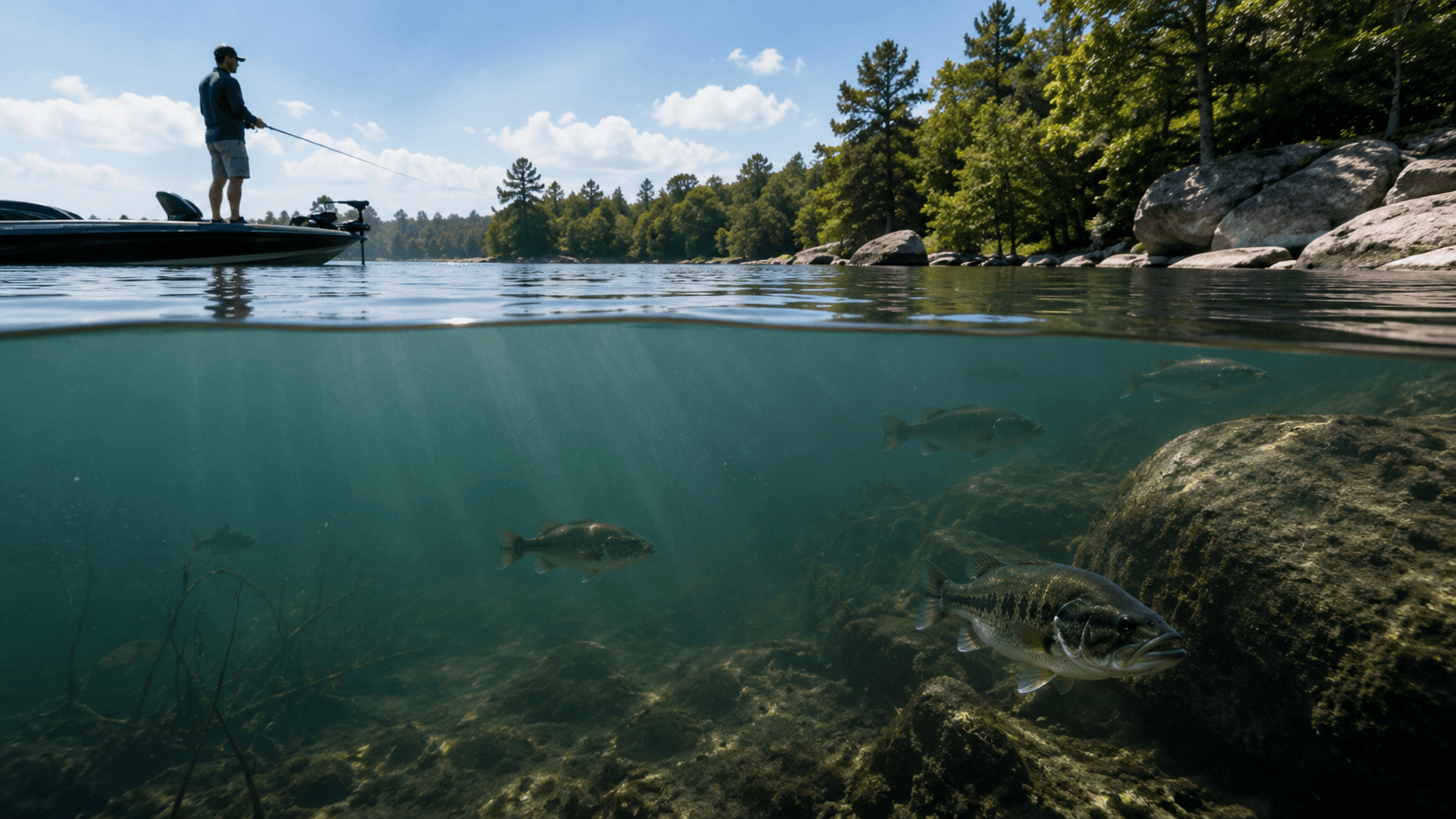
Most anglers choose a lure first and a location second. That is backwards. Water temperature sets the metabolism of a cold-blooded animal, and metabolism decides whether a fish is hunting, holding, or shut down entirely.
The bands that matter
Below 50 degrees, a largemouth's metabolism collapses. It still eats, but rarely, and the strike is so soft you will miss it if the line is not tight. Fish group up in the deepest stable water they can find.
Between 60 and 65 degrees, the spawn begins. Males fan nests on hard bottom, usually two to six feet down. Fish on beds are aggressive, but they are defending, not feeding, and that distinction changes everything about how you present a bait.
From 65 to 75 degrees is the feeding window. This is when a bass will chase, when reaction strikes work, and when covering water beats finesse.
Above 80 degrees, oxygen thins in the shallows and the biggest fish retreat under matted vegetation or to deeper structure, moving only at low light.
What to do with this
Carry a thermometer. Take a reading at the ramp and another wherever you fish for more than twenty minutes. A three-degree difference across a lake will concentrate fish in ways no amount of casting will reveal.
When water is cold, slow down and stay on the bottom. When it is warm, speed up and trigger reactions. Match the retrieve to the temperature before you match anything else.