
You're standing beside a river at dusk, watching the current fold around a deep bend. The water looks ordinary, yet somewhere below it a broad, whiskered fish may be holding near the bottom, waiting for food to drift within reach. Before choosing bait or deciding where to cast, you need to know what you're looking at, what people in that region call it, which habitat fits the season, and which regulations apply to that specific water.
Channel catfish reward that kind of attention. They live in rivers, lakes, reservoirs, streams, and ponds, they're widespread across North America, and they can turn a simple freshwater outing into a serious fight. This profile connects the everyday names anglers use with Ictalurus punctatus, then moves through identification, habitat, seasonal depth cues, bait choices, trip planning, and regulation checks.
Table of Contents
- Introduction to Channel Catfish as a Premier Game Fish
- How to Identify Channel Catfish With Confidence
- Common Nicknames and Search Terms That Point to Channel Catfish
- Geographic Range and Preferred Habitats Across Waters
- Seasonal Patterns and Depth Cues for Trip Planning
- Proven Baits and Rigs and When to Use Each
- Quick How To Tips for Targeting Channel Catfish
- Regulations Stocking Context and Quick Reference Hub
Introduction to Channel Catfish as a Premier Game Fish
Channel catfish occupy an unusual place in freshwater fishing. They're familiar enough for a first trip, but their behavior can keep experienced anglers learning. A pond fish, a reservoir fish, and a river fish may all belong to the same species while demanding very different expectations from the person holding the rod.
The fish also matters well beyond recreation. Global channel catfish production reached 454,477 tonnes in 2019 across six producing countries, with aquaculture accounting for 453,511 tonnes and capture fisheries accounting for only 996 tonnes, according to this review of the channel catfish industry in China. That split shows why channel catfish should be understood as a major farm-produced freshwater fish, not solely a wild river catch.
Why the species deserves a dedicated profile
A nickname can point you toward the wrong fish. A familiar habitat description can hide an important difference between a stocked pond and a large river. A regulation that applies statewide may not apply to an urban water, stocked water, or trophy-managed river section.
This guide keeps those questions together:
- Identify the fish first: Use physical cues before treating a local name as proof.
- Read the water second: Look for the bottom-oriented habitat that fits the species and the water type.
- Add the season: Temperature, oxygen, current, and depth change the fish's position.
- Check the rules last, but always: Size limits, daily limits, and special water regulations can differ sharply.
The experience is part of the appeal. In a pond, the setting might be quiet and close to home. In a river, the same species can make the current feel much larger than it looked from shore. Channel catfish are accessible, but they aren't simplistic. Learning their identity and habitat gives every trip more meaning, whether the goal is a meal, a personal milestone, or just the satisfaction of finding a fish that knows how to use moving water.
How to Identify Channel Catfish With Confidence
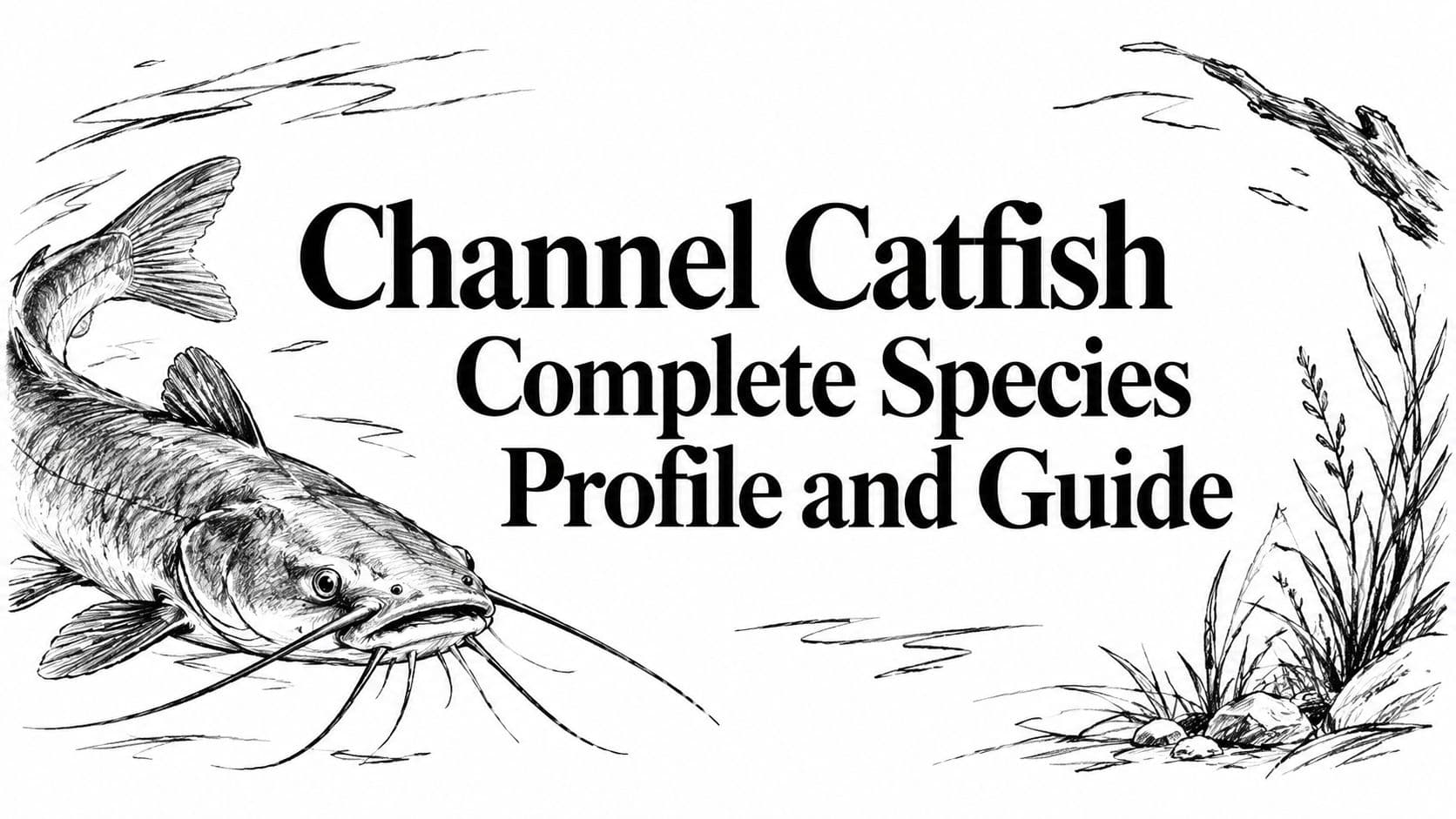
Start with the overall shape. A channel catfish has a long, slender body, a flattened head, whisker-like barbels around the mouth, and a deeply forked tail. Its coloring often ranges from bluish silver to gray, with darker shading along the back. Young and medium-sized fish can show scattered dark spots, which explains the nickname “spotted cat.”
The anal fin is another useful comparison cue. Channel catfish have a rounded anal fin, a feature that helps separate them from blue catfish and flathead catfish when the tail or body color is difficult to judge. For a second visual reference, use this channel catfish identification guide alongside the field checklist below.

A fast streamside checklist
- Check the tail. A forked tail supports channel catfish identification. A broad, less-forked tail points you toward a different catfish.
- Look at the body profile. Channel catfish have a more fusiform shape than flathead catfish, whose head and body have a heavier, flatter appearance.
- Inspect the spotting. Dark spots are common on younger channel catfish, though large adults may show less obvious patterning.
- Study the anal fin. A rounded anal fin is a valuable cue when comparing channel catfish with blue catfish.
- Use size as context, not proof. Mature channel catfish are often 12 to 32 inches long, while large adults can reach about 50 inches, according to the Florida Museum species profile.
Juveniles create the most confusion because their spots and compact proportions can make them look unlike the large fish anglers picture. Large adults create a different problem. Their markings may be subdued, so tail shape, fin shape, head profile, and barbels become more dependable than color alone.
Pause before taking a harvest photo. Photograph the whole fish from the side, include the tail and anal fin, and avoid relying on a close-up of the head. If the fish is going back, support its body and keep handling brief, especially in warm conditions.
This short visual reference can reinforce the anatomy and comparison points before you head out:
Common Nicknames and Search Terms That Point to Channel Catfish
Anglers rarely speak in scientific names around a campfire. They say channel cat, “spotted cat,” “willow cat,” or “fiddler,” depending on region, fish size, and local tradition. Those names can be useful clues, but they aren't consistent enough to replace physical identification.
The authoritative species name is Ictalurus punctatus. Searchers who begin with “channel cat” usually mean channel catfish, while “spotted cat” often points to the dark markings seen on younger fish. “Willow cat” and “fiddler” are more likely to describe small fish in local usage, particularly fish considered suitable for eating. The same nickname may not carry the same meaning everywhere, so treat it as an entry point rather than a final answer.

Why nickname-first searching helps
A search for “catfish bait” is broad. A search for “spotted cat in river” may return several possibilities. Starting with the nickname, then confirming the scientific species and ID cues, narrows the information before you apply habitat or seasonal advice.
Use the terms as a simple translation map:
- Channel cat: Common angler shorthand and the clearest everyday search term.
- Spotted cat: A reference to dark spots often visible on young or medium-sized fish.
- Willow cat: A regional name commonly associated with a small juvenile channel catfish.
- Fiddler: A local term for a small, eating-size fish.
The practical mistake is not using a nickname. The mistake is assuming the nickname has universal meaning. A search result about a blue catfish, flathead catfish, or another locally named species can send you toward the wrong habitat and the wrong regulation page.
Confirm the fish with the forked tail, rounded anal fin, body shape, and coloration described above. Then search the water body, state, or province separately. That two-part process keeps species identification and local compliance connected without treating either one as automatic.
Geographic Range and Preferred Habitats Across Waters
Channel catfish are native to much of the central and eastern United States and have been widely introduced across the country. Their documented habitat includes rivers, streams, lakes, reservoirs, and ponds, as described in this FishBase country species summary. That broad distribution explains why anglers encounter the species in both natural systems and managed waters.

Rivers and streams
Channel catfish are bottom-oriented fish. In rivers, they commonly use deep pools and runs over sand or rocky bottoms. A trip plan should therefore begin with water that offers depth, a firm or mixed bottom, and enough current to deliver food without forcing the fish into the strongest flow.
A deep pool below a riffle can provide resting water and an incoming food path. An outside bend may hold depth, while an inside bend can create a slower edge beside current. Rocky bottoms, submerged edges, and changes from shallow run to deeper hole all deserve attention, but the fish doesn't need to sit directly in the fastest water.
Streams can hold channel catfish where deeper features persist. In smaller water, a single pool, undercut bank, or downstream bend may matter more than a long stretch of uniform channel.
Lakes and reservoirs
In still water, look for the underwater continuation of river habitat. Old channels, submerged creek lines, drop-offs, and areas where depth changes are more useful starting points than featureless flats. Reservoirs often combine current-like inflows with broad open water, giving channel catfish several ways to position near food and cover.
Lakes can also hold fish around sandy or rocky areas, especially where those areas connect to deeper water. The aim isn't to label every piece of structure as productive. It's to find a location that gives a bottom-oriented fish access to depth, food, and tolerable water conditions.
Ponds and managed waters
Ponds can support channel catfish even when they lack dramatic river structure. A deeper basin, aerated area, inlet, or shaded bank may matter more than visible cover. Stocking history also changes expectations, so a pond managed for harvest may fish differently from a reservoir supporting older, larger adults.
Channel catfish prefer warm water, averaging about 70°F, or 21.1°C, according to the Florida Museum profile. They're freshwater fish with limited salt tolerance, and one management reference notes intolerance above 1.7 parts per thousand salinity in the New Jersey channel catfish resource. For trip planning, that means focus on freshwater habitat first and treat marginal estuarine water cautiously.
Seasonal Patterns and Depth Cues for Trip Planning
Season changes the question from “Where does this species live?” to “Which part of that habitat is most comfortable today?” Channel catfish respond to temperature, food movement, current, and oxygen. Depth is useful, but it's a clue, not a guarantee.

Spring
As water warms, channel catfish may move from wintering areas toward shallower feeding zones. River anglers can examine the transition between a deep pool and a shallower run. Lake anglers can look for flats near a creek channel or a bank that warms earlier than surrounding water.
The key is stability. A warm afternoon can make shallow water attractive, but a sharp cold change can push fish back toward depth. Spring trips work best when you read the recent weather rather than assuming the calendar tells the whole story.
Summer
Summer often creates a useful day and night contrast. Shallow areas can become more active after dark, while deeper water offers relief during bright, warm periods. Current breaks, shade, and well-aerated water may matter as much as depth.
Channel catfish are associated with clean, well-oxygenated conditions. Productive management references commonly discuss dissolved oxygen above 7 mg/L and temperatures near 26 to 30°C, as reported in the New Jersey channel catfish document. Those figures are management context, not a promise that every fish will occupy one exact measurement.
For a comparison with another large catfish species, see the blue catfish reference, but don't transfer its behavior automatically. Species, water type, and local conditions still control the decision.
Fall
Cooling water often brings a strong feeding period before winter conditions dominate. Moderate depths, channel edges, and areas that connect feeding water with secure holding water become sensible places to investigate.
Fall is a good time to think in routes rather than isolated spots. A river bend, adjacent flat, and nearby pool may form one connected seasonal area. In a reservoir, a creek arm or submerged channel can serve the same role.
Winter
Winter generally favors deeper, more stable water with dependable oxygen. Channel catfish may hold tightly in pools, old channels, or the deepest available basin. Slow conditions don't mean the fish have disappeared. They mean the trip may require more attention to location and patience.
Depth cue: Start with the deepest well-aerated habitat available, then adjust toward shallower water when warming, food movement, or current conditions give the fish a reason to move.
Proven Baits and Rigs and When to Use Each
Bait selection should follow the water and the fish's likely mood, not habit alone. Natural and cut baits create scent and food signals, while prepared baits can make sense in ponds, lakes, and slower water where smaller channel catfish are the main expectation.
Natural and cut bait choices
Cut bait is a strong river reference point because a piece of fish can release scent while remaining substantial enough for a larger channel catfish. Sucker, shad-like forage, and other legally obtained local baitfish may fit the food base of a given water, but local possession and bait regulations always come first.
Prepared dip, dough, and stink baits can be practical in ponds and slower-water settings. They're easy to carry and can attract channel catfish where fish are accustomed to feeding around stocked or managed environments. Their trade-off is selectivity. They may draw smaller fish or nuisance species when larger river fish are the goal.
Live bait can be useful when fish are actively feeding near cover or along a current edge. The advantage is movement and a natural profile. The disadvantage is that live bait demands more attention to legality, storage, and the specific forage available in that water.
Common rig categories
A slip-sinker rig gives the fish room to move while keeping the bait near the bottom. It suits river pools, reservoir channels, and deeper pond areas where bottom contact matters.
A float or suspended presentation can help when fish rise above a soft bottom, use a weed edge, or occupy a defined depth. It's less about making the bait look fashionable and more about keeping it in the zone you've identified.
A simple bottom rig with a short leader can be useful around firm bottom and moderate current. A longer leader can separate the bait from the sinker and allow more movement, but it can also become harder to control around snags.
| Bait or Rig | Best Habitat and Season | Why It Works | Watch Out For |
|---|---|---|---|
| Cut bait | Rivers and channels, especially during active feeding periods | Sends a recognizable food and scent signal along the bottom | Baitfish rules, freshness, and nuisance bites |
| Prepared bait | Ponds, lakes, and slower water | Convenient scent-based option for managed fisheries | May attract smaller fish or non-target species |
| Live bait | Edges, cover, and active seasonal periods | Adds movement and a natural profile | Must match local regulations and forage conditions |
| Slip-sinker rig | Deep pools, reservoir channels, and current breaks | Keeps bait near bottom while allowing movement | Snags and excessive line movement |
| Suspended or float rig | Weed edges, soft bottoms, or fish holding above bottom | Places bait at a chosen depth | Requires a reliable depth read |
| Short-leader bottom rig | Firm bottom with manageable current | Gives stable bottom contact and simple presentation | Less separation from the sinker |
The best pairing is the one that keeps the bait in the habitat described in the seasonal section above. A perfect bait in empty water is still in the wrong place.
Quick How To Tips for Targeting Channel Catfish
Begin with a map, not a tackle box. Mark deep pools, channel bends, creek mouths, reservoir channels, pond inlets, and any area where shallow water meets a deeper basin. Then compare those features with the season and recent weather.
Read the water in layers
- River pools: Look for the resting side of current, especially where a seam delivers food into deeper water.
- Reservoir flats: Find the submerged channel or drop that gives catfish an easy route between feeding water and depth.
- Small ponds: Check the deeper basin, aerated water, inlet, and shaded edges before spreading effort across featureless shoreline.
- Changing conditions: If water rises or falls quickly, examine slower water near the bank or beside a break rather than assuming the deepest hole always wins.
Positioning matters because channel catfish don't need to fight the strongest current continuously. They can hold near the flow, collect food, and shift a short distance when conditions change. That makes a small difference in casting angle or boat position meaningful, especially in rivers.
Let the fish tell you what kind of day it is
If activity starts shallow during a warming period, follow that clue along nearby flats and edges. If bites or signs point toward deeper, oxygenated water, stay with the seasonal pattern instead of forcing a shallow-water plan.
Keep the adventure flexible. A first stop can answer a location question, a second can test a depth change, and a third can show whether the pattern belongs to the entire water body or only one feature. Handle landed fish carefully, identify them before harvest, and release unwanted fish promptly.
On-water habit: Write down the habitat, depth, weather, and time whenever you find fish. Your notes will become more useful than a generic “catfish spot” label.
Regulations Stocking Context and Quick Reference Hub
Regulations are part of species identification. Knowing that a fish looks like a channel catfish doesn't tell you whether you can keep it, how many you may retain, or whether the water has a special rule.
Large river systems show why a single rulebook assumption can fail. Recent fisheries literature describes the Ohio River using a trophy-oriented slot limit, while the Wabash moved from simple minimum-length rules to the same slot approach after concerns about fishing mortality and immature-fish harvest, as detailed in this river channel catfish management study. These rules reflect different management goals, including protection of quality-sized fish and balance among recreational, commercial, and trophy interests.
Pennsylvania provides another reminder that water type matters. A 2024/2025 state management plan describes statewide channel catfish rules of 20 fish per day with no length limit, while urban and stocked waters receive tighter or different treatment in the channel catfish stocking and management reference. Don't transfer those figures to another state or water body.
Stocking and aquaculture context
Channel catfish are overwhelmingly farm-produced globally. China produced nearly two-thirds of reported world output in 2019, while the United States produced roughly one-third, with Russia, Mexico, Italy, and Bulgaria together contributing less than one percent, according to the international industry review.
The United States has also experienced a long consolidation cycle. A U.S. catfish industry review reports 1,155 farms on 181,940 acres in 2003, compared with 54,700 acres devoted to channel catfish farms in 2016. The industry still generated $361 million in total sales in 2015, including $345 million from foodfish, and Mississippi, Alabama, Arkansas, and Texas accounted for 96% of total sales. Those figures explain why channel catfish fisheries often connect recreational access with organized production and stocking systems.
A Canadian project imported about 7,000 triploid channel catfish fry in spring 2025 for field trials scheduled for 2026/27, while a 2026 snapshot recorded 3,002 stocking records across 204 waters in Utah, Washington, and Montana, representing about 8.7 million fish documented from 1937 to 2026, according to the stocking reference above. Treat these as evidence of active management experimentation, not as a prediction for every pond.
Before fishing, verify the current regulations with the responsible state, provincial, or local agency. Check the exact water body, species definition, size limit, daily limit, bait rules, seasonal closures, and special stocked-water provisions. For broader conservation context, use the invasive fish species reference, then return to the agency page for the rule that legally controls your trip.
Quick lookup order:
- Confirm identity: Use the forked tail, rounded anal fin, body profile, and markings.
- Confirm water: Match the habitat to river, reservoir, lake, stream, or pond conditions.
- Confirm season: Use temperature, oxygen, depth, and recent weather as practical cues.
- Confirm regulations: Read the current jurisdiction-specific rule before keeping a fish.
- Confirm your plan: Choose the location and timing that fit the fish, not just the bait you already own.
CatchAnything.com connects nicknames and common names with searchable species profiles covering identification, habitat, seasonal patterns, and proven lures. Visit CatchAnything.com to verify channel catfish details, compare related catfish species, and plan your next freshwater trip with the right fish in mind.